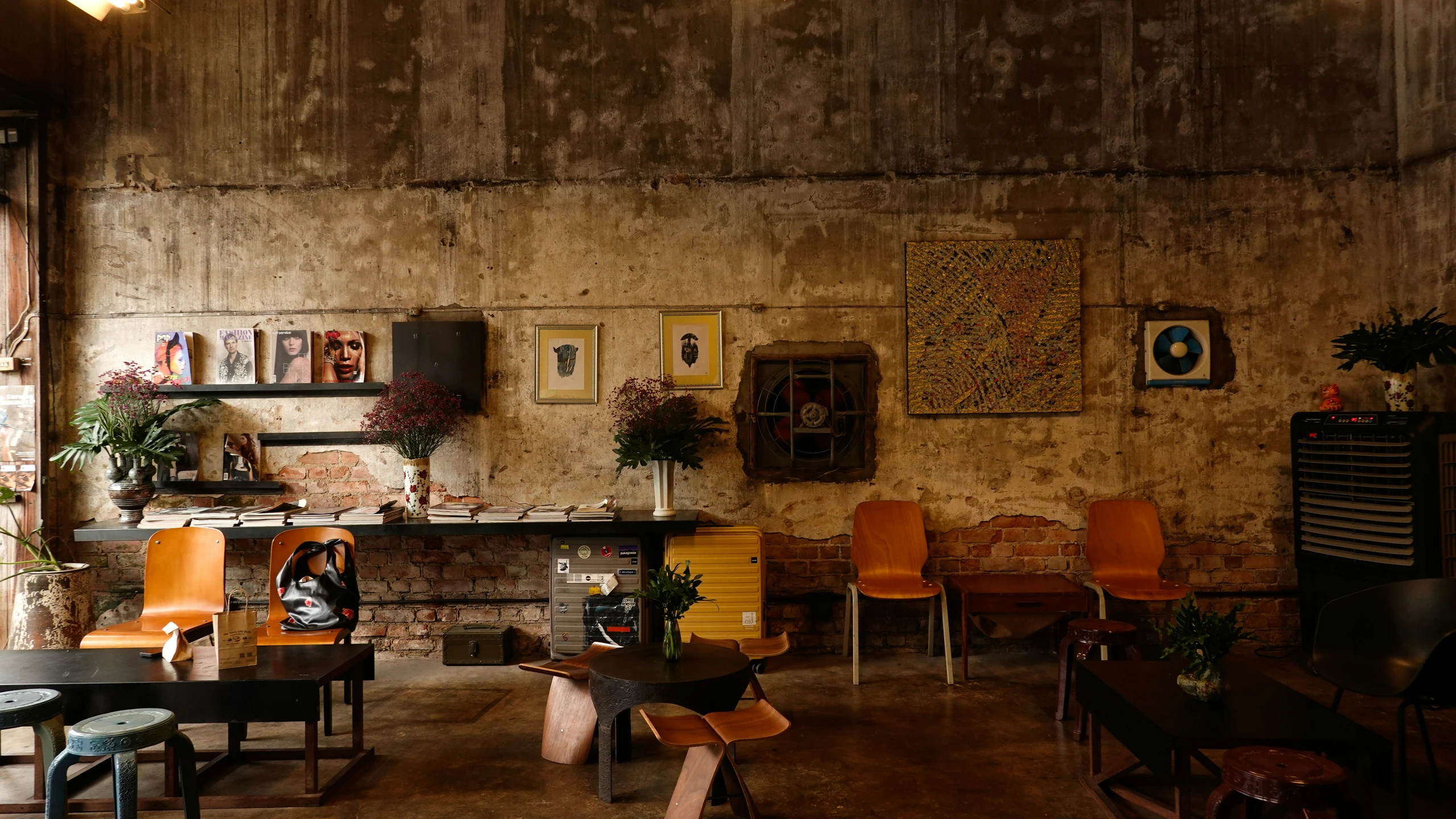
What first connects co-living and co-working is not simply the range of activities they contain, but the amount of time people spend there: long enough for routines to form, for days to change direction, for work to run beyond its formal hours, and for a meal, a pause or an evening to alter the pace without erasing what came before. That familiarity changes the role of music. It is no longer simply heard; it becomes part of the life of the place over time.
Music Eye View works within that duration. Musical presence shifts with the life of the place without loosening its identity: fuller when the moment calls for it, more restrained when conversation, concentration or privacy comes to the fore, renewed enough for familiarity never to become repetition. Coliving is still, fundamentally, about living there; co-working about working there. We govern what connects them from that distinction.
Espacio
Coliving
Over time, co-living gathers everything that makes up a daily life: routines taking root, familiar faces, shared moments finding their own rhythm, and the essential freedom to join communal life or return to one’s own.
La música establece, por tanto, una relación con el tiempo muy distinta de la que mantiene en un lugar de paso. Lo que resulta adecuado en una primera escucha debe seguir siéndolo días, semanas y, a veces, meses después; lo que se integra con naturalidad en un momento compartido no puede asumir la misma presencia cuando el lugar vuelve a ser más íntimo. A esta escala, la repetición importa tanto como la propia selección, y la renovación ya no consiste en sustituir temas a intervalos regulares. Consiste en preservar suficiente capacidad de descubrimiento para impedir que la familiaridad se convierta en previsibilidad.
Music Eye View gobierna esa duración tanto como la música que la habita. Damos forma al repertorio, su densidad, el lugar de las voces, las transiciones y el silencio para que el carácter del espacio pueda cambiar sin perder aquello que lo hace reconocible. Algunas horas admiten una presencia musical mayor; otras requieren más contención. El propósito nunca es llenar de música la vida cotidiana, sino dejar espacio suficiente para que una dirección sonora pueda pertenecer al lugar sin apoderarse de él.
Coworking
Lo que comienza en la concentración puede abrirse a la conversación, prolongarse durante una comida, dar paso al movimiento y adquirir gradualmente un tono más social. Sin embargo, el lugar nunca cambia por completo al mismo tiempo: mientras una parte de la jornada se relaja, otra sigue necesitando la calma, la claridad y la calidad de atención sin las cuales trabajar resulta más difícil.
That is where music requires its own judgement. It cannot simply follow the clock, because several versions of the place may exist at once; nor can it settle into a safe middle ground that fully suits none of them. It has to accompany what opens up without intruding on what remains focused, gain presence without losing proportion, and leave pockets of quiet untouched when work still needs them.
Music Eye View governs this plurality without flattening it. The sound direction can grow in scale, change colour, become lighter or disappear altogether, but every shift remains connected to the same understanding of the place. Coherence comes not from making programmes resemble one another, but from making their differences deliberate.
Tiempo
While one part of the place remains absorbed in work, another has already opened itself to food, movement or conversation; later, social life gains ground while the demands of the earlier hours still persist here and there. Coliving and co-working are made up of times that cross, extend into one another and sometimes pull in different directions, far more than of a neat succession of clearly separated moments. The day does not advance in boxes: it changes by degrees, by shifts, by one use slowly folding into another.
That shifting geography is what we read.
Espacio, use and moment are never considered in isolation. Where they meet determines how much room music can take, where it must give way, which contrasts it can carry and which continuities it needs to preserve.
Tiempo, then, is no longer a sequence of programmes. It is the ability to let several versions of the place coexist without any one of them losing its balance.
Lo queperdura
A sound identity is not sustained by what is playing today alone. It also depends on whether, tomorrow, the reasons behind a choice can still be understood: why music was given more room here, held back there, what may change freely and what needs continuity. In places where uses, teams and rhythms keep changing, that memory becomes part of the governance itself.
What the place reveals over time
A place never remains exactly as its programme described it. As people live or work there, some spaces gain importance, others recede, and routines take root where none had been planned. Sound direction has to absorb what the place reveals about itself without starting again from a blank page each time.
Boundaries that remain clear
Hybrid places bring uses closer together without making them equivalent. Communal life can spill into a workspace; work can continue into more social hours. Gobernanza sonora also means preserving those distinctions when the boundaries themselves become less visible.
A memory that outlasts individual teams
Residents change, memberships turn over and teams hand on responsibility. The reasons behind a choice still need to remain accessible. What was decided, moved, retained or set aside becomes part of the place’s memory, clear enough for those who arrive later to continue without beginning again.
Rules that can move with the place
With time, a balance that was right can stop being right. A space changes function, footfall grows, certain hours take on more importance. Gobernanza does not protect decisions from change; it makes clear when change itself has become a decision.
An identity that can change without losing itself
The place may change substantially without severing continuity with what it was. Lo que perdura is neither a programme, a repertoire nor a fixed sonic formula. It is the way decisions continue to relate to one another even as uses, rhythms and sometimes the place itself change.
Ámbitos de aplicación
Some places are built around new ways of living; others rethink how work fits into the day; others bring the two close enough to coexist under one identity. That proximity does not make them interchangeable. The sound direction has to hold their different balances together precisely because the uses overlap without becoming the same.
Coliving
Shared residences, apartments or studios extended by communal life; residential concepts in which daily life reaches well beyond the private space. Music enters into a long relationship with the people who live there: it has to remain right through familiarity, repetition and renewal, while leaving the possibility of withdrawal intact.
Coworking
Espacios de trabajo compartidos, oficinas flexibles, sedes independientes o redes repartidas entre varios lugares. La jornada puede cambiar de registro varias veces sin que el trabajo deje de proporcionar su estructura subyacente. La dirección sonora acompaña esas variaciones y preserva lo que siguen exigiendo la concentración, la conversación y el uso profesional.
Espacios mixtos
Some projects bring residence, work, food, wellbeing, events and social life close enough to blur boundaries that once seemed clear on paper. We do not reduce them to a single mood. We preserve the differences that make them work, so that each use keeps its own measure while still belonging to an identity the place can recognise as its own.
Start the conversation
A project may still exist only on plans, may already have been in use for years, may concern one address or need coherence across a network. The conversation starts with the place as it actually is: what already exists, what still needs to be decided, and what its uses have revealed over time.
Preguntasfrecuentes
¿Todos los espacios necesitan la misma identidad sonora?
No. Una identidad compartida no exige los mismos programas ni la misma intensidad en todas partes. Lo que importa es la coherencia de la dirección: algunos espacios pueden admitir una presencia musical más marcada; otros pueden requerir más contención o incluso silencio, sin que el lugar pierda su continuidad sonora.
¿Cómo evitar que la música resulte repetitiva para quienes residen o acuden habitualmente?
La exposición repetida se integra en la gobernanza desde el principio. Trabajamos la profundidad del repertorio, su renovación, las variaciones de densidad y de registro, y los momentos en que la música debe retirarse. El objetivo no es cambiar por cambiar, sino preservar una familiaridad que nunca llegue a ser previsible.
¿Puede Music Eye View intervenir antes de la apertura del lugar?
Sí. Music Eye View puede intervenir en una fase muy temprana del proyecto, cuando todavía se están definiendo los usos, los ritmos y las relaciones entre los espacios. Esto permite considerar la dirección sonora antes de que las decisiones sobre la difusión sonora o los hábitos operativos comiencen a condicionarla, y acompañarla después durante la implementación y la vida del lugar.